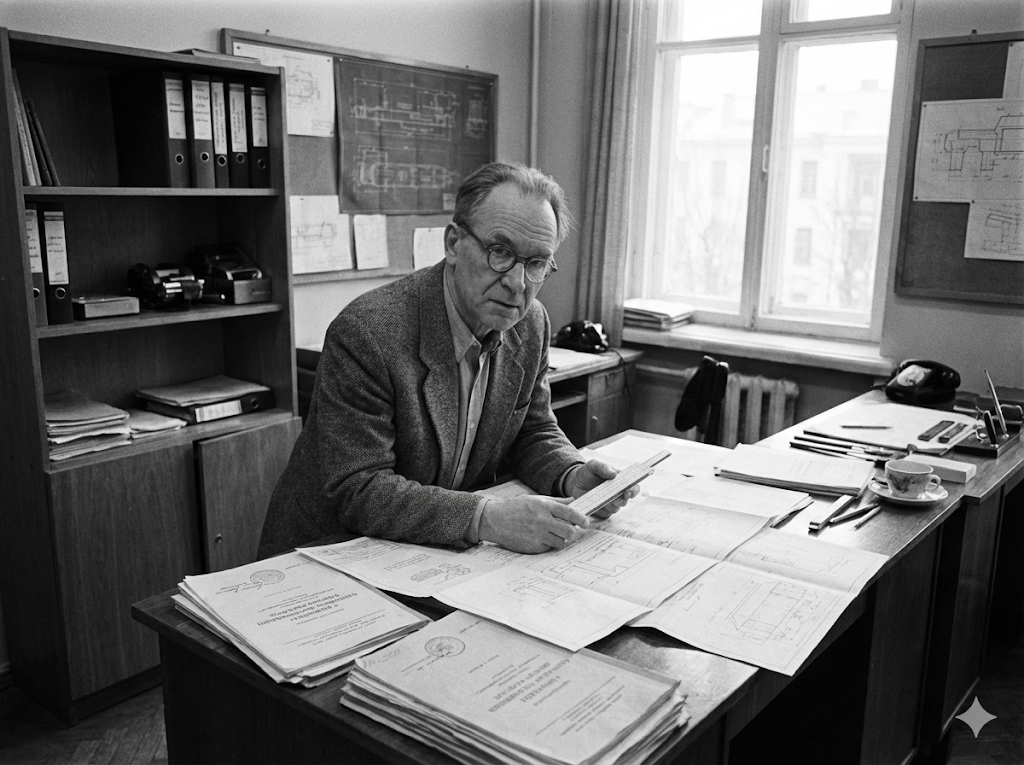
TRIZ 40 Inventive Principles - Systematic Innovation Method
Genrich Altshuller's Revolutionary Problem-Solving Framework
Master TRIZ (Theory of Inventive Problem Solving), the world's most powerful systematic innovation methodology. Based on the analysis of over 200,000 patents by Genrich Altshuller, TRIZ provides 40 inventive principles that solve 95% of technical problems.
What is TRIZ?
TRIZ is a Russian acronym for "Theory of Inventive Problem Solving." Developed by Genrich Altshuller and his colleagues starting in 1946, TRIZ identifies patterns of invention from hundreds of thousands of patents. Instead of relying on random brainstorming, TRIZ provides systematic principles that guide you to breakthrough solutions.
The 40 Inventive Principles Include:
- Segmentation: Divide objects into independent parts or make them modular
- Taking Out: Extract the problematic part or property from an object
- Local Quality: Change structure from uniform to non-uniform for optimization
- Asymmetry: Replace symmetrical forms with asymmetrical ones for better function
- Merging: Bring together identical or similar operations in space or time
- Universality: Make objects perform multiple functions to eliminate other parts
- Nested Doll: Place objects inside each other to save space
- Anti-Weight: Compensate for weight using aerodynamic or hydrodynamic forces
- Preliminary Anti-Action: Pre-stress objects to counteract harmful effects
- Preliminary Action: Perform required changes in advance
- Beforehand Cushioning: Prepare emergency means beforehand to compensate for low reliability
- Equipotentiality: Change operating conditions to eliminate lifting or lowering
- The Other Way Round: Invert the action used to solve the problem
- Spheroidality: Move from linear to rotary motion or use centrifugal forces
- Dynamics: Make objects automatically adjust for optimal performance
- Partial or Excessive Actions: Make slightly less or slightly more than needed
- Another Dimension: Move to multi-level or 3D arrangements
- Mechanical Vibration: Use oscillation or ultrasonic vibrations
- Periodic Action: Replace continuous action with periodic or pulsed action
- Continuity of Useful Action: Eliminate idle or intermittent actions
- Skipping: Conduct a process at high speed to eliminate harmful effects
- Blessing in Disguise: Use harmful factors to achieve positive effects
- Feedback: Introduce feedback loops to improve processes
- Intermediary: Use an intermediary carrier or temporary process
- Self-Service: Make objects service themselves or use wasted resources
- Copying: Use simplified or optical copies instead of complex originals
- Cheap Short-Living Objects: Replace expensive objects with cheap disposables
- Mechanics Substitution: Replace mechanical systems with sensory fields
- Pneumatics and Hydraulics: Use gas or liquid instead of solid parts
- Flexible Shells and Thin Films: Use flexible shells instead of 3D structures
- Porous Materials: Make objects porous or add porous elements
- Color Changes: Change the color of objects or their environment
- Homogeneity: Make interacting objects from the same material
- Discarding and Recovering: Discard parts after use or modify them during work
- Parameter Changes: Change physical states, concentration, or flexibility
- Phase Transitions: Use phenomena occurring during phase transitions
- Thermal Expansion: Use thermal expansion or contraction of materials
- Strong Oxidants: Replace common air with oxygen-enriched air or pure oxygen
- Inert Atmosphere: Replace normal environment with inert atmosphere or vacuum
- Composite Materials: Change from uniform to composite materials
Why TRIZ Works:
Unlike random brainstorming, TRIZ is based on patterns found in successful inventions. When faced with a technical problem, TRIZ helps you:
- Identify the core contradiction in your problem
- Select relevant inventive principles from the 40 principles
- Apply proven solution patterns to your specific challenge
- Generate patentable innovations systematically
- Solve problems that seem impossible using conventional thinking
Real-World TRIZ Success Stories:
- Boeing: Used TRIZ to reduce aircraft manufacturing costs
- Samsung: Trains all engineers in TRIZ methodology
- Procter & Gamble: Uses TRIZ for product innovation
- Ford Motor Company: Applied TRIZ to solve engineering challenges
Who Should Use TRIZ?
- Inventors developing breakthrough products
- Engineers solving complex technical problems
- Product designers seeking innovative solutions
- R&D teams working on next-generation technologies
- Patent attorneys developing patentable concepts
- Students learning systematic innovation
- Entrepreneurs creating competitive advantages
From a Design Engineer with 100+ Patents
TRIZ principles have been used to develop numerous patented inventions for major companies including DeWalt, Black & Decker, and Stanley. With 30+ years of experience, I've seen firsthand how TRIZ transforms impossible problems into elegant solutions. This interactive tool makes TRIZ accessible to inventors at every level.
Interactive TRIZ Tool Features:
- All 40 inventive principles with detailed explanations
- Real-world examples for each principle
- Guided questions to apply principles to your problem
- Save and track your solutions
- Download your TRIZ analysis
- Copy results for documentation
- Mobile-friendly interface
The History of TRIZ:
In 1946, Genrich Altshuller, a young Soviet engineer and patent examiner, began analyzing thousands of patents. He discovered that inventions followed predictable patterns and could be classified into 40 fundamental principles. Despite being imprisoned for his ideas, Altshuller continued developing TRIZ, which became one of the most powerful innovation methodologies in the world.
Keywords: TRIZ, Theory of Inventive Problem Solving, 40 inventive principles, Genrich Altshuller, systematic innovation, patent analysis, technical problem solving, innovation methodology, inventive principles, TRIZ method, contradiction matrix, TRIZ tools, engineering innovation, product development, creative engineering, breakthrough innovation, patent generation, TRIZ framework, technical creativity, innovation training