Design Thinking - Human-Centered Innovation Methodology
Stanford d.school's 5-Stage Framework for User-Focused Problem Solving
Master Design Thinking, the world's most effective human-centered innovation methodology. Developed at Stanford's d.school (Hasso Plattner Institute of Design), this 5-stage process helps inventors, designers, and entrepreneurs create products that truly solve user problems.
What is Design Thinking?
Design Thinking is a non-linear, iterative process that teams use to understand users, challenge assumptions, redefine problems, and create innovative solutions. Unlike traditional problem-solving that jumps straight to solutions, Design Thinking starts with deep empathy for the people you're designing for.
The 5 Stages of Design Thinking:
- Empathize - Understand Your Users: Deeply research and observe the people you're designing for. Discover their needs, pain points, motivations, and behaviors through interviews, observation, and immersion in their world.
- Define - Frame the Problem: Synthesize your research into a clear, actionable problem statement. Define the real user need you're solving, not just the symptoms. Create a focused point of view that guides ideation.
- Ideate - Generate Solutions: Brainstorm a wide range of creative solutions without judgment. Use techniques like brainstorming, mind mapping, SCAMPER, and "How Might We" questions to generate diverse ideas.
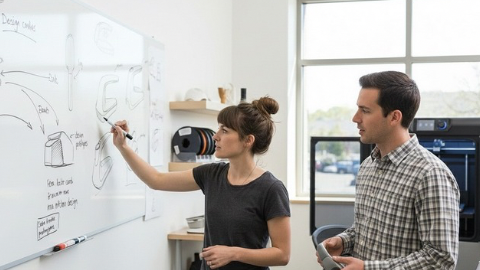
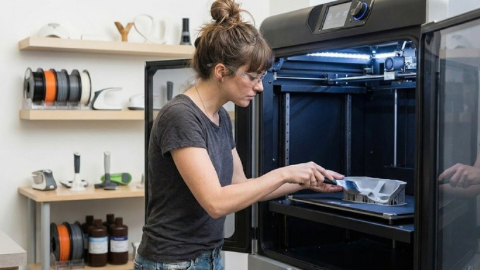
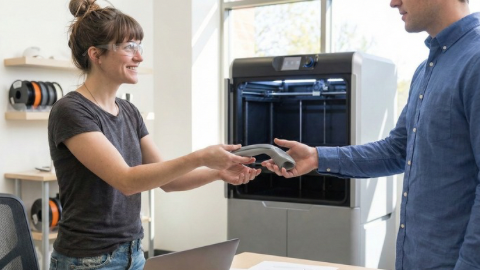
- Prototype - Build to Think: Create quick, low-cost prototypes to explore your ideas. Build rough models, sketches, storyboards, or mockups that make concepts tangible and testable with minimal investment.
- Test - Learn and Iterate: Test your prototypes with real users. Gather feedback, observe reactions, learn what works and what doesn't. Refine your solution based on insights and repeat the process.
Why Design Thinking Works:
Unlike traditional engineering or business approaches that start with technical feasibility or profitability, Design Thinking starts with user desirability. This human-centered focus ensures you're solving real problems that people actually have. Key advantages include:
- Reduces risk of building products nobody wants
- Uncovers hidden user needs through empathy research
- Generates more creative solutions through divergent ideation
- Tests ideas quickly and cheaply through rapid prototyping
- Learns from failures early when changes are still inexpensive
- Involves users throughout the process for continuous validation
- Creates products with strong product-market fit
Real-World Design Thinking Success Stories:
- Apple: iPhone design emerged from deep empathy for how people actually use phones
- Airbnb: Rescued failing startup by living with users and redesigning based on real needs
- Bank of America Keep the Change: Generated $1.8B in deposits through empathy-driven design
- GE Healthcare MRI: Redesigned scary MRI machines as adventure experiences for children
- Oral-B: Created better toothbrushes by observing how people actually brush their teeth
- Nike Flyknit: Developed revolutionary shoe technology by understanding athlete needs
Who Should Use Design Thinking?
- Inventors developing new products that solve real user problems
- Product designers seeking user-centered innovation approaches
- Entrepreneurs validating startup ideas before major investment
- Engineers wanting to ensure technical solutions meet actual needs
- UX/UI designers creating better user experiences
- Innovation teams in established companies seeking breakthrough ideas
- Students learning human-centered design methodology
- Anyone who's ever built something only to find nobody wanted it
From a Design Engineer with 100+ Patents:
Throughout my 30+ years developing products for DeWalt, Black & Decker, and Stanley, I've learned that the best inventions come from deeply understanding user frustrations. Design Thinking formalizes this intuition into a repeatable process. I've used empathy research to discover that users weren't asking for the "right" features—they were working around deeper problems we hadn't recognized. This methodology prevents the classic inventor mistake: building clever solutions to problems nobody actually has.
The History of Design Thinking:
While designers have always thought about users, Design Thinking as a formal methodology emerged in the 1960s-70s through the work of design theorists like Herbert Simon, Robert McKim, and Rolf Faste. The modern 5-stage framework was popularized by Stanford's d.school (founded 2005) and the design firm IDEO, led by David Kelley and Tim Brown.
David Kelley, founder of IDEO and Stanford's d.school, democratized Design Thinking by showing that anyone can use these methods—not just trained designers. The methodology spread rapidly through business, education, and government sectors worldwide.
Design Thinking vs. Traditional Engineering:
Traditional engineering often starts with technical constraints: "What can we build with our technology?" Design Thinking flips this: "What do users actually need?" Then you figure out how to build it. This doesn't mean ignoring technical feasibility—it means ensuring you're solving the right problem before investing in complex engineering solutions.
When to Use Design Thinking:
- Starting a new product from scratch with uncertain user needs
- Improving existing products that aren't meeting user expectations
- Entering new markets where you don't fully understand users
- Solving "wicked problems" with no obvious solution path
- When technical solutions exist but adoption is low (probably solving wrong problem)
- Team disagreements about what users want (research provides clarity)
- Before significant investment in tooling or manufacturing
Common Design Thinking Mistakes to Avoid:
- Skipping Empathize: Assuming you already know what users need without research
- Weak Problem Definition: Jumping to solutions before clearly defining the problem
- Single Solution Bias: Settling on first idea instead of exploring alternatives
- High-Fidelity Prototypes Too Soon: Investing heavily before validation
- Testing with Wrong Users: Asking friends/family instead of target users
- Ignoring Negative Feedback: Defending your idea instead of learning from failures
- One-and-Done: Forgetting Design Thinking is iterative—expect multiple cycles
Design Thinking is Non-Linear:
While presented as 5 sequential stages, real Design Thinking loops back constantly. Testing might reveal you misunderstood the problem (back to Define). Prototyping might spark new ideas (back to Ideate). Empathy research might continue throughout. The stages are waypoints in an iterative journey, not a rigid checklist.
Interactive Design Thinking Tool Features:
- All 5 stages with detailed guidance and real examples
- Guided questions for each stage to structure your thinking
- Empathy mapping techniques for understanding users deeply
- Problem statement frameworks (Point of View, How Might We)
- Ideation prompts and brainstorming techniques
- Prototyping guidance from sketches to physical models
- Testing frameworks for gathering meaningful user feedback
- Save multiple insights per stage
- Progress tracking across all 5 stages
- Download your complete Design Thinking analysis
- Copy results for documentation and sharing
- Mobile-friendly interface for fieldwork
Combining Design Thinking with Other Methods:
Design Thinking pairs beautifully with other innovation frameworks:
- SCAMPER: Use in Ideate stage to generate creative modifications
- TRIZ: Apply in Ideate/Prototype when solving technical contradictions
- Six Thinking Hats: Use in Define stage to explore problem from all angles
- Jobs-to-be-Done: Complement Empathize stage with jobs-based user research
- Lean Startup: Combine rapid prototyping with MVP testing methodology
The Three Lenses of Innovation:
IDEO's Tim Brown describes innovation as the intersection of three considerations:
- Desirability: What do users want? (Design Thinking's primary focus)
- Feasibility: What's technically possible? (Engineering perspective)
- Viability: What's economically sustainable? (Business perspective)
Design Thinking starts with desirability, then brings in feasibility and viability. This sequence prevents building technically impressive products that nobody wants.
Empathy: The Foundation of Design Thinking:
The Empathize stage isn't just "talking to users." It's about:
- Observation: Watch how people actually use products (vs. how they say they use them)
- Engagement: Interview users about their experiences, frustrations, and goals
- Immersion: Experience the user's world firsthand to discover hidden insights
Great inventions often come from noticing what users have learned to tolerate—the workarounds, frustrations, and compromises they don't even mention because they've accepted them as "just how things are."
Prototyping Philosophy: Build to Think:
Design Thinking prototypes aren't meant to be perfect—they're meant to be informative. A cardboard mockup, rough sketch, or role-playing scenario can answer critical questions faster and cheaper than CAD models or engineering prototypes. Prototype fidelity should match your uncertainty: low fidelity when exploring, higher fidelity when refining.
Design Thinking Mindsets:
- Human-Centered: Keep users at the center of every decision
- Bias Toward Action: Build and test instead of endless analysis
- Embrace Ambiguity: Uncertainty is where innovation lives
- Radical Collaboration: Diverse perspectives create better solutions
- Learn from Failure: Failures are data points, not final verdicts
- Show Don't Tell: Prototypes communicate better than words
Getting Started with Design Thinking:
Enter your product concept or challenge in the setup section. Then work through each of the five stages, answering the guided questions. Don't rush—especially the Empathize stage, which sets the foundation for everything else. Remember: Design Thinking is iterative. Your first pass won't be your last. Each cycle reveals deeper insights.
Whether you're developing your first invention or refining an existing product, Design Thinking ensures you're solving real problems for real people. Let's begin.
Keywords: Design Thinking, human-centered design, Stanford d.school, user-centered innovation, empathy-driven design, design thinking process, 5 stages of design thinking, empathize define ideate prototype test, IDEO methodology, David Kelley, Tim Brown, product development framework, user research methods, rapid prototyping, iterative design, creative problem solving, innovation methodology, user experience design, customer-centric innovation, design thinking tools, human-centered problem solving