SIT - Systematic Inventive Thinking Innovation Methodology
5 Counter-Intuitive Techniques for Pattern-Based Product Innovation
Master Systematic Inventive Thinking (SIT), the Israeli-developed innovation methodology that flips traditional brainstorming on its head. Based on analysis of thousands of patents, SIT teaches you 5 proven patterns that drive 70-80% of breakthrough innovations: Subtraction, Multiplication, Division, Task Unification, and Attribute Dependency.
What is Systematic Inventive Thinking (SIT)?
Systematic Inventive Thinking is a constraint-based innovation methodology developed by Israeli researchers Roni Horowitz and Jacob Goldenberg. Unlike traditional brainstorming that starts with unlimited possibilities, SIT works "inside the box"—applying specific constraints and patterns that force creative problem-solving. Research shows that innovation isn't random; it follows predictable patterns found in successful inventions worldwide.
The 5 SIT Techniques:
- Subtraction - Remove to Innovate: Remove essential components from your product or service and find creative ways to maintain or improve functionality. This counter-intuitive technique often leads to simpler, more elegant solutions. Examples: Dyson bladeless fan, wireless earbuds, cordless power tools.
- Multiplication - Copy and Modify: Duplicate a component and change it in a meaningful way. Create variations of existing parts to unlock new functionality or solve problems differently. Examples: Multi-blade razors, dual-lens cameras, multi-screen displays.
- Division - Reorganize and Separate: Break your product into separate parts and rearrange them in time or space. Divide functions, redistribute components, or separate elements to create new configurations. Examples: Modular furniture, separable product components, distributed systems.
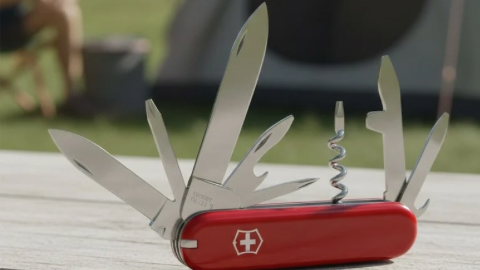
- Task Unification - One Thing, Multiple Jobs: Assign additional tasks to existing components. Make one element serve multiple purposes, reducing complexity while adding functionality. Examples: Swiss Army knife, smartphone apps, multifunctional tools.
- Attribute Dependency - Create Dynamic Relationships: Create new dependencies between product attributes. Make one characteristic change based on another, adding intelligence and adaptability to your design. Examples: Transition lenses, thermostatic valves, adaptive cruise control.
Why SIT Works:
Traditional brainstorming generates quantity but not quality—hundreds of ideas with no structure for evaluation. SIT generates fewer ideas, but they're grounded in proven innovation patterns. Key advantages include:
- Systematic approach eliminates random guessing and trial-and-error
- Constraints force deeper creative thinking than unlimited freedom
- Based on analysis of thousands of real patents and successful products
- Generates practical innovations that are both creative AND feasible
- Works especially well for product improvement and redesign
- Faster than unstructured brainstorming—apply 5 techniques systematically
- Produces innovations that are patentable and commercially viable
Real-World SIT Success Stories:
- Subtraction: Removing soap dispenser from washing machines (use detergent in drum directly)
- Multiplication: Gillette's multi-blade razors created entirely new product category
- Division: Separating computer components (tower, monitor, keyboard) enabled customization
- Task Unification: Tire treads that also indicate wear level (pattern changes as tire wears)
- Attribute Dependency: Photochromic lenses that darken based on UV exposure
- Procter & Gamble: Used SIT to develop successful new product variations
- Samsung: Applied SIT patterns to consumer electronics innovation
Who Should Use SIT?
- Inventors seeking systematic approach to product innovation
- Product designers improving existing products or creating variations
- Engineers solving technical design problems with constraints
- R&D teams in manufacturing needing practical innovation methods
- Patent developers looking for patentable improvements
- Industrial designers working on product evolution and refinement
- Entrepreneurs adapting existing products for new markets
- Anyone frustrated with random brainstorming sessions that go nowhere
From a Design Engineer with 100+ Patents:
In 30+ years developing power tools and industrial products, I've found that constraints drive innovation better than freedom. When you're forced to remove a component (Subtraction) or make one part do two jobs (Task Unification), you think harder and innovate deeper. SIT formalizes what successful inventors have always done intuitively—work within limitations to create breakthrough solutions. Many of my own patents emerged from asking "What if we eliminated this part?" or "What if this component also did that job?" SIT gives you a systematic framework for asking those questions.
The History of Systematic Inventive Thinking:
1990s - The Pattern Discovery: Israeli researchers Roni Horowitz and Jacob Goldenberg analyzed thousands of patents and successful products, discovering that 70-80% of breakthrough innovations followed just 5 core patterns. This research at Hebrew University of Jerusalem became the foundation of SIT.
Early 2000s - Academic Validation: Research papers validated that teaching these 5 patterns led to more innovative solutions in less time, higher success rates in product development, and innovations that were both creative and practical. Unlike traditional brainstorming which generates quantity, SIT generated quality.
2000s-2010s - Industry Adoption: Major corporations adopted SIT for R&D: Procter & Gamble for product development, Samsung for consumer electronics, and Israeli startups built companies using SIT principles. The method proved especially powerful in manufacturing, consumer goods, and technology sectors.
Today - Global Innovation Method: SIT is taught in business schools, used by Fortune 500 companies, and applied by inventors worldwide. It's particularly popular among engineers and product designers who need practical innovation, not just creative ideas.
SIT Philosophy: "Inside the Box" Thinking
SIT's core insight contradicts common advice: constraints don't limit creativity—they enable it. By working within boundaries (remove this, copy that, unify these), you're forced to think harder and innovate deeper. As Roni Horowitz said: "Creativity is not about freedom—it's about working smartly within constraints." This aligns with real-world invention where cost, materials, manufacturing, and physics impose unavoidable constraints.
SIT vs. Other Innovation Methods:
- SIT vs. TRIZ: TRIZ has 40 principles; SIT simplified it to 5 core patterns. SIT is faster, more focused, and easier to learn. TRIZ addresses contradictions; SIT applies patterns.
- SIT vs. Design Thinking: Design Thinking starts with user empathy and problem definition; SIT starts with your existing product and applies patterns. Use Design Thinking to find the problem, SIT to solve it.
- SIT vs. SCAMPER: Both are pattern-based, but SIT patterns are proven through patent analysis. SCAMPER is broader; SIT is more focused on product innovation.
- SIT vs. Brainstorming: Brainstorming is unstructured and generates quantity; SIT is systematic and generates quality. SIT gives you specific techniques rather than hoping for inspiration.
When to Use SIT:
- Improving or innovating existing products (SIT's sweet spot)
- Creating product variations or new models from existing designs
- Cost reduction through component elimination (Subtraction)
- Solving technical design problems with real constraints
- Patent development—SIT generates patentable variations
- When brainstorming feels stuck or generates impractical ideas
- Product line extensions and incremental innovations
- Manufacturing optimization and design for manufacturing (DFM)
How to Apply SIT Systematically:
Don't just brainstorm randomly. Work through each technique methodically:
- Start with your product: Define what you're innovating clearly
- Apply Subtraction: Remove one essential component—how could it still work?
- Apply Multiplication: Copy a component and modify it—what new function emerges?
- Apply Division: Break it apart—how could pieces be rearranged?
- Apply Task Unification: Make one part do multiple jobs—what's possible?
- Apply Attribute Dependency: Make one attribute change based on another—what's adaptive?
- Evaluate results: Which innovations are practical, patentable, and valuable?
Common SIT Mistakes to Avoid:
- Superficial Subtraction: Removing non-essential parts doesn't force innovation—remove something critical
- Pointless Multiplication: Copying components without meaningful modification adds complexity, not value
- Division Without Purpose: Breaking things apart randomly—division should solve a problem
- Task Overload: Unifying too many tasks in one component creates complexity and failure points
- Trivial Dependencies: Creating obvious attribute relationships—seek surprising, valuable connections
- Applying Just One Technique: Work through all 5 systematically for comprehensive innovation
- Ignoring Feasibility: SIT generates creative ideas, but evaluate technical and economic viability
Subtraction: The Most Powerful SIT Technique
Subtraction is counter-intuitive: how does removing something create innovation? But it works because:
- Forces you to solve problems creatively instead of adding complexity
- Often leads to cost reduction and manufacturing simplification
- Creates "less is more" elegance that users appreciate
- Reveals unnecessary components you assumed were essential
Examples: Cordless drills removed power cords. Wireless earbuds removed wires. Dyson fans removed blades. Each subtraction forced creative problem-solving that led to better products.
Task Unification: Elegant Simplicity
Task Unification makes products smarter and simpler simultaneously. Instead of adding components for new functions, you make existing components multitask. This reduces parts count, cost, and complexity while adding capability. The best inventions often achieve multiple functions with minimal components—Task Unification formalizes this principle.
Attribute Dependency: Adding Intelligence
Attribute Dependency creates "smart" products that adapt automatically. Instead of manual adjustment, the product responds to conditions. This technique is increasingly powerful with sensors and smart materials. Examples: self-adjusting suspension, auto-dimming mirrors, temperature-responsive fabrics, pressure-sensitive touchscreens.
Combining SIT Techniques:
The most innovative products often apply multiple SIT techniques:
- Subtraction + Task Unification: Remove a component and make remaining parts handle its function
- Division + Multiplication: Separate product and multiply components in new arrangement
- Attribute Dependency + Task Unification: One component does multiple jobs based on conditions
Don't limit yourself to one technique per innovation—combine them for breakthrough results.
SIT for Patent Development:
SIT is exceptionally valuable for patent development because:
- Generates systematic variations that are patentable improvements
- Creates "around" existing patents by applying different patterns
- Produces innovations grounded in proven successful patterns
- Helps identify which innovations are novel enough for patent protection
- Provides structured documentation of innovation process for patent applications
Many of my own patents emerged from systematic SIT application—it's not just creative exploration, it's strategic IP development.
Interactive SIT Tool Features:
- All 5 SIT techniques with detailed guidance and real examples
- Guided questions for each technique to structure systematic thinking
- Subtraction prompts: remove essential components creatively
- Multiplication guidance: copy and modify for new functions
- Division frameworks: separate and rearrange in time or space
- Task Unification ideas: assign multiple jobs to single components
- Attribute Dependency examples: create dynamic, adaptive relationships
- Save multiple innovations per technique
- Progress tracking across all 5 patterns
- Download your complete SIT analysis
- Copy results for documentation and patent applications
- Mobile-friendly for workshop and field use
Combining SIT with Other Innovation Methods:
- Design Thinking + SIT: Use Design Thinking's Empathize/Define stages to identify problems, then SIT's techniques to generate solutions
- TRIZ + SIT: Use TRIZ to resolve contradictions, SIT to apply proven patterns
- Six Thinking Hats + SIT: Use Six Hats to evaluate SIT-generated innovations from multiple perspectives
- Jobs-to-be-Done + SIT: Understand user jobs, then use SIT to innovate products that do those jobs better
SIT in Different Industries:
- Consumer Products: Product line extensions, cost reduction, feature innovation
- Manufacturing: Process improvement, tooling optimization, assembly simplification
- Industrial Design: Form factor innovation, ergonomic improvements, material optimization
- Electronics: Component integration, miniaturization, functionality expansion
- Software/Digital: Feature consolidation, UI simplification, smart automation
Getting Started with SIT:
Enter your product or concept in the setup section. Then systematically work through each of the five techniques, answering the guided questions. Don't skip techniques—even if one seems irrelevant, force yourself through it. Often the techniques that seem least applicable generate the most surprising innovations.
Remember: SIT isn't about random creativity. It's about systematic application of proven patterns. Work methodically through all five techniques, document your ideas, and evaluate which innovations are practical and valuable.
Whether you're developing a new invention or improving an existing product, SIT gives you a repeatable process for pattern-based innovation. Let's begin.
Keywords: Systematic Inventive Thinking, SIT methodology, Israeli innovation method, constraint-based innovation, inside the box thinking, subtraction technique, multiplication innovation, division technique, task unification, attribute dependency, Roni Horowitz, Jacob Goldenberg, pattern-based innovation, product innovation framework, systematic creativity, innovation patterns, patent development methods, Hebrew University innovation, practical innovation techniques, engineering innovation tools, product improvement methodology, design pattern thinking