F1- AN INNOVATION MACHINE.
Formula 1 teams are the among fastest product developers on Earth.
They design, test, and deploy improvements in days.
USE OUR FORMULA ONE THINKING TOOL
Every weekend is a high-stakes test with millions watching. There's no time for slow decision-making or lengthy development cycles.
The Secrets Behind F1’s Relentless Pursuit of Excellence
I’ve been an F1 fan for as long as I can remember, Ive been to many British and Australian GP and next year we are going to the Japanese Grand Prix in Suzuka.
I've devoured countless interviews with the likes of Christian Horner, Toto Wolff, Adrian Newey, James Vowels, Mark Webber on how F1 teams are run and what makes them so special.
There are several common themes which are shown below.
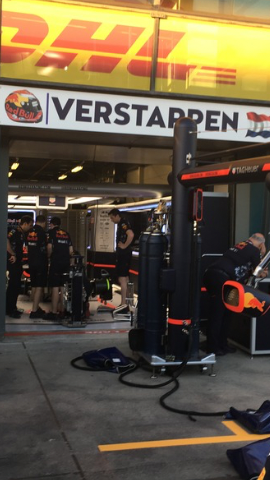
Definetly No politics. No waste. No nonsense.
At its core are timeless principles: systematic innovation, an obsession with the smallest details, and a relentless chase for absolute excellence.
And the “no politics” rule? It’s no empty mantra or PR spin—it’s a performance differentiator etched in the results sheet.
Just look at today’s grid: the two teams plagued by notorious corporate meddling, Ferrari and Alpine, are mired in frustration—Ferrari chasing shadows in fourth, whilst Alpine and parent Renault now withdrawing compleatly despite a proud but sporadic history.
Leaner, interference-free outfits like McLaren and Mercedes surge ahead.
In F1’s unforgiving arena, boardroom meddling doesn’t just distract.
It drags down lap times, proving that true speed demands ruthless focus over bureaucratic noise.
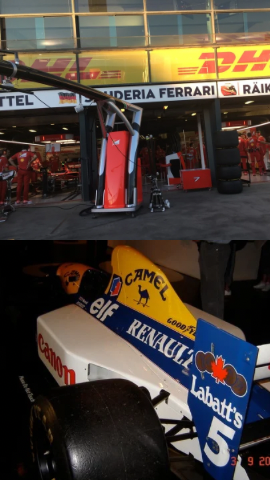
Every 1% gain is pursued like a championship point.
Discipline and organization operate on another level. Tools are returned to their exact spots. Workshops gleam with immaculate cleanliness. Purpose-built jigs and fixtures ensure precision—you’ll rarely spot an engine component perched on a plastic chair.
It’s a culture of honesty, forged in passion, long hours, and the bold acceptance of failure. Mistakes aren’t punished; they’re dissected for rapid lessons, fueling the next breakthrough.
Behind the scenes, massive engineering teams drive the magic, but a visionary chief engineer or designer steers the ship; and is accountable.
This leader owns the car’s overall concept and architecture, blending aerodynamics, chassis, and powertrain into a symphony of speed.
Icons like Adrian Newey (Red Bull’s departing genius), Rob Marshall (McLaren’s chassis maestro), and Enrico Cardile (Ferrari’s technical director) embody this role.
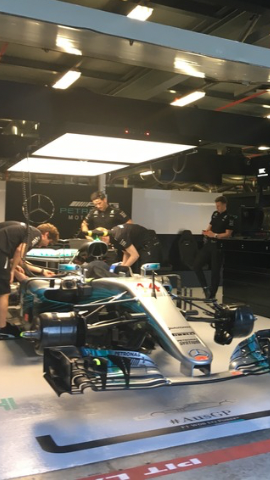
Formula 1 is a brutally dangerous sport.
Where speeds top 220 mph and margins for error are razor-thin.
A driver’s life hinges on flawless design and assembly—every bolt torqued to spec, every carbon fiber layer bonded perfectly, every safety cell tested to withstand 20g impacts.
One oversight isn’t just a DNF; it could be fatal, as history’s tragedies remind us.
That’s why the stakes amplify the scrutiny: excellence isn’t optional; it’s survival.
This ethos permeates every corner of the team, from reception to the garage.
A stray coffee cup or crumpled newspaper at the front desk?
Unthinkable. If the basics falter, how can you trust the engine’s flawless assembly?
Companies should treat their customers like engineers treat F1 Drivers.
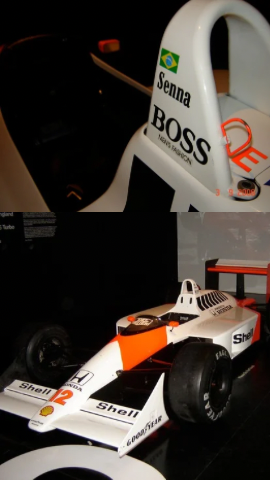
Communication is lightning-fast, crystal-clear, and uncompromising.
In engineer-driver briefings and debriefs, everyone wears headsets on a single channel—no side chatter, just focused intel.
Seamless collaboration underpins it all, powered by cutting-edge communication tools that keep the global workforce aligned.
Atlassian staples like Confluence (for centralized knowledge sharing and wikis) and Jira (for agile issue tracking and sprint planning) as well as Smart Sheet (McLarens preffered project managemnt and issues tracking software) are F1 favorites.
Williams Racing, for instance, leverages them to consolidate scattered spreadsheets into a single source of truth for asset management and race prep.
Tools like EventR streamline event coordination and real-time updates during grands prix, ensuring no detail slips through the cracks.
Whether logging a wind tunnel anomaly or briefing on a last-minute regulation tweak, these platforms foster transparency, slashing miscommunication in a sport where seconds count.
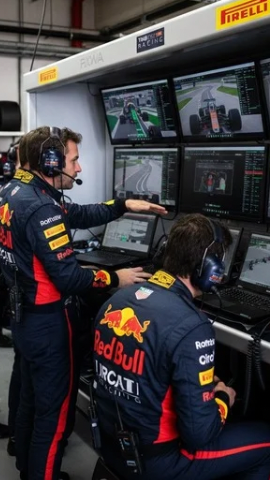
Management stays lean: thin hierarchies, minimal reporting layers.
Goals and objectives are laser-sharp, etched into the team’s DNA.
Talented eccentrics are welcomed—their complex personalities often fuel genius—but arrogance and ego? They’re swiftly checked.
The mantra is simple: focus on the issue, not the person.
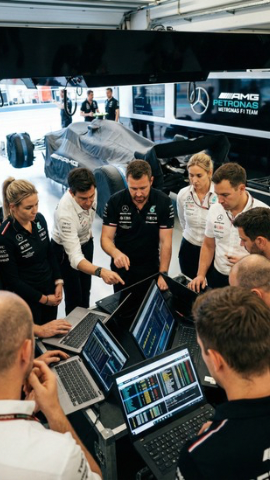
Exceptional engineering thrives on data—oceans of it.
Advanced simulations, CFD modeling, and telemetry dashboards power decisions, turning raw numbers into lap-time edges.
Failure? It’s embraced more than success. As one team quips, “The day we lose is the day our competitors will regret.”
The same Countdown clocks tick in every workspace, syncing the entire team of 00's or even 000's to team deadlines.
Nothing’s left to chance: every scenario is prepped with forensic detail to banish surprises.
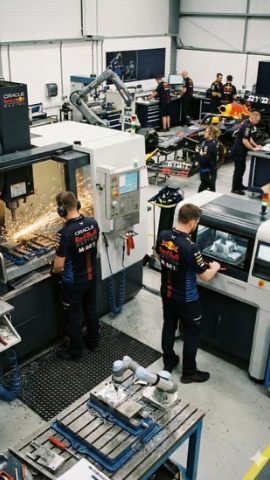
F1 Rapid Prototyping & Manufacturing Technique
Formula 1 teams rapidly innovate by moving from polymer 3D printing for rapid testing to high-precision CNC machining for final structural integrity.
Polymer & Composite 3D Printing
• McLaren (Stratasys): Produces over 9,000 parts annually—including sacrificial composite molds, slashing lead times from weeks to days using FDM and SLA tech.
• Alpine (3D Systems): Operates a fleet of SLA/SLS machines to churn out 600 parts weekly.
• VCARB (Roboze): Uses the Argo 500 to print end-use brake cooling ducts in high-performance PEEK and Carbon.
• Williams (Nexa3D): Leverages high-speed polymer printing for overnight production of testing components
• Ferrari (3D Systems): Employs Direct Metal Laser Sintering (DMLS) for complex, lightweight titanium.
• Grid-wide Application: All teams (e.g., Red Bull, Mercedes) rely on high-tolerance CNC milling for final structural parts.
It’s refreshing, too, that unlike other industries F1 cars aren’t built to a cost.
Strict regulations and a $145 million cost cap (as of 2025) level the playing field without capping ambition.
This raises sky-high barriers to entry, safeguarding the UK’s storied tradition of motorsport excellence.
F1 was created in the UK with the first race held on May 13th, 1950 at Silverstone, which, fittingly, is still home today of the British Grand Prix.
Centered in the fabled Motorsport Valley—a 40-mile corridor from Oxford to Northampton housing over 4,000 companies, 200+ suppliers, and half the world’s F1 components—the UK boasts an unmatched talent pool.
From wind tunnel wizards to composite craftsmen.
This ecosystem has birthed legends like Williams and McLaren, insulating it from low-cost economies abroad.
F1 teams invest heavily in nurturing the next generation.
Through structured programs that blend hands-on experience with world-class training.
This talent ecosystem doesn’t just exist—it’s actively cultivated to guarantee a steady influx of skilled staff. Internships and industrial placement abound.
With opportunities listed across all 10 teams for 2026 via platforms like Formula Careers—think summer stints at Haas exposing rookies to high-stakes engineering or Aston Martin’s graduate schemes funneling fresh talent into aero and simulation roles.
On the driving side, most teams have young drivers academies and initiatives, such as F1 Academy (an all-female series backed by McLaren and others) and the FIA’s Girls on Track develop prospects from karting upward, providing coaching, testing, and funding to bridge the gap to the grid.

F1 generated a record $3.65 billion in revenue in 2024.
And is on track for more in 2025 with Q2 alone hitting $1.34 billion, fueled by sponsorships, media rights, and track fees.
827 million fans worldwide make it the planet’s top annual sports series, with viewership shattering records via Netflix’s Drive to Survive and packed grands prix from Vegas to Singapore.
In F1, team success directly fattens paychecks across the board, turning results into shared windfalls.
The Constructors’ Championship splits a $1.2 billion prize pot (2025 figures): winners like McLaren snag ~$168 million (14%), while laggards get ~$72 million (6%). Ferrari’s legacy bonus adds $50–60 million more.
This flows straight to staff—bonuses at Red Bull or Mercedes can boost salaries 10–20% for podiums, scaling to six-figure team-wide pools for titles. Mid-season surges trigger “win shares” for everyone.
In a millimeter-margin sport, it keeps the 1,000-strong crew laser-focused as triumphs pay dividends for all.

So What are some easy gains any company can learn from F1?
🤼 Do not tolerate internal Politics: This is not just talk to sound good. Teams like Ferrari and Alpine (Renault) show how corporate interference holds them back, while focused ones like McLaren pull ahead.
🤹♂️ Keep management lean: Flat structures avoid layers of bureaucracy and mis communication. Management is necessary but too much is counter productive.
📆 Use tools like Confluence: Tools for sharing information across the company, Jira for task tracking, and EventR for coordinating travel and logistics so everyone is on the same page. Aim for a single source of truth, not multiple spreadsheets and information stored in hard to find emails...
🎧 In meetings, try headsets: A single channel to cut out distractions, side conversations and keep things moving and as a bonus meetings can be easily recorded.
📆 Plan and organize meticulously: Lock down everything you already know to avoid unnecessary surprises. It’s hard enough dealing with the unknowns, so nail the knowns—you shouldn’t be constantly reinventing the wheel.
🐣 Invest in nurturing talent: Through internships, apprenticeships, and clear succession paths.
🗣 Encourage straight-up honest communication: Where people learn from failures and successes quickly.
🎭 Debrief every project: Lock in what worked and learn from what didn’t so you dont repeat mistakes.
👕 Why not introduce a team uniform: When I worked at Black & Decker, we all wore company-branded polos or dress shirts, and I can honestly say it created a strong sense of unity and team identity.
👽 Don’t hire people just to ‘fit in.’ Some of the most creative individuals have complex personalities, but don’t encourage ego—bring in those who challenge the norm while maintaining respect and collaboration.
📢 Ensure objectives are unmistakably clear: Teams move faster, stay focused, and deliver better outcomes if everyone is driving towards same goal.
🧹💯 A company should reflect its values in every corner: Spotless, organised, and consistent from the front desk to the workshop.
⏰ Use visible countdown clocks: Keep the whole team focused across the company to track product launches, trade shows, and sales.
🔎 Test, Test,Test and Test To failure. Reliability in F1 is essential as in all products and services. So test relentlessy,and preferably test to failue to find the limits.
👹 Obsess over the details: The devil really is in the detail and they shape outcomes.
🥇 Link bonuses to results: The whole team must feel the win.
👀 Always hunt for those small 1% improvements: Incremental Small, easy gains can compound and become massive.
This is all practical stuff from F1 that can sharpen any operation.
I love F1 for a reason—it is the reason I am a Design Engineer.
Back in school, I wrote a letter to Patrick Head, the legendary Williams co-founder and designer, begging for advice on breaking into the sport.
To my astonishment, he replied with warmth: “Get a mechanical engineering degree, then apply.”
I never did apply to an F1 team, but I’ve since crossed paths with several F1 engineers in the UK’s fabled Motorsport Valley as F1 is a huge employer of UK Engineering talent.
Our interactive tool unpacks the playbook of Mercedes, Red Bull, Ferrari, and McLaren—decoding breakthrough methods under race-day pressure.
From simulation wizardry to data-fueled iterations and endless refinement, these aren’t mere pit-stop tricks.
They’re universal principles for turning pressure into podiums. In this cauldron, the “test fast, fail fast, learn fast” mindset is pushed to its limit. It’s not just a racing creed; it’s a blueprint for innovation, whether you’re prototyping a gadget or scaling a startup.